
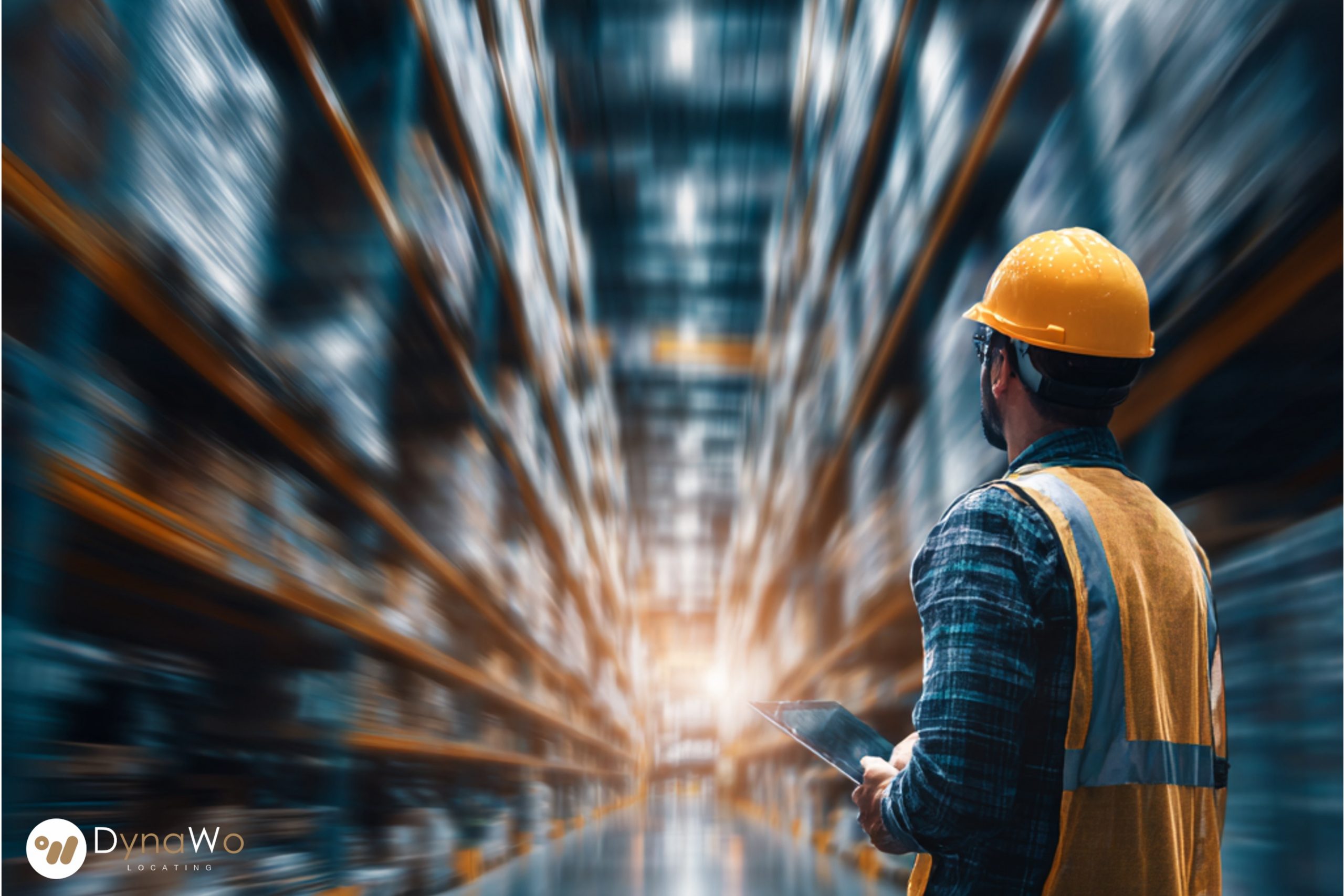
When people think about warehouse work, they picture shelves, boxes, and forklifts. They don’t see the constant urgency. Every minute counts. Every step matters. Packages come in, move across zones, get scanned, sorted, stacked, and shipped. In case one goes missing, the entire chain slows down. Before RTLS, most of our job depended on memory, improvisation, and luck. If a box was misplaced, we searched. If a cart was taken to the wrong aisle, we kept asking around until someone found it. It was stressful, especially during peak hours.
When our warehouse introduced RTLS, it changed the environment around it in a way that made everything more manageable and transparent. Work is becoming more interoperable, without waiting or constantly asking.
Most packages now carry RFID labels, which are cost-effective at scale. Instead of tracking each item individually in real time, the system works through association. As a trolley of packages moves through the warehouse, a beacon attached to the trolley is tracked continuously by the RTLS infrastructure. Workers link packages to the trolley by scanning the QR codes on both, so their positions are tied together on the digital map. If a parcel ends up on the wrong rack, which happens more than people think, I can still locate it in seconds by tracing the last known trolley position. No more wandering through rows of shelves or interrupting colleagues. The system just shows me: “Aisle 14, bay 3, left-hand shelf.”
Carts and pallet jacks carry UWB tags for precise tracking. UWB anchors compute their position using time-difference-of-arrival, so we know exactly where each cart is, even in metal-heavy zones or high-density inventory areas. When multiple workers are operating in tight aisles, UWB helps prevent collisions between carts, workers, and forklifts. Alerts pop up on handheld devices if equipment is approaching too quickly or entering a congested zone.
My own badge is Bluetooth-based, with an accelerometer and a small SOS button. The tag is there to protect me. If I slip, get injured, or stay immobile too long, the system flags it. Supervisors get an immediate alert with my location. It’s comforting, especially during night shifts when staffing is lower and the warehouse feels too large and too quiet.
Geofences make daily routines smoother. High-value storage, temperature-controlled zones, and hazardous-material sections are all geofenced areas. If I accidentally enter a zone without authorization, my badge vibrates, and the control panel highlights it. It prevents mistakes without needing someone to constantly watch over us.
RTLS also makes picking paths smarter. The system analyzes package movements, congestion trends, and worker routes over time. On busy days, it suggests the least crowded path for each assignment. The difference is noticeable: fewer slowdowns, fewer traffic jams in popular aisles, and less backtracking. It makes the pressure of fast picking feel more manageable, more structured.
What surprised me most was how much calmer the job feels now. I used to dread losing a package: The stress of stopping everything to search, the fear of delaying a truck departure. But with RTLS, the warehouse works more like a coordinated system instead of a maze we’re all trying to navigate on instinct.
I still lift, scan, and deliver the same packages. The work is still physical and fast paced. But now I’m not fighting confusion on top of everything else. The environment helps me instead of working against me.
RTLS lightened the mental load. And in a warehouse, that makes all the difference.