
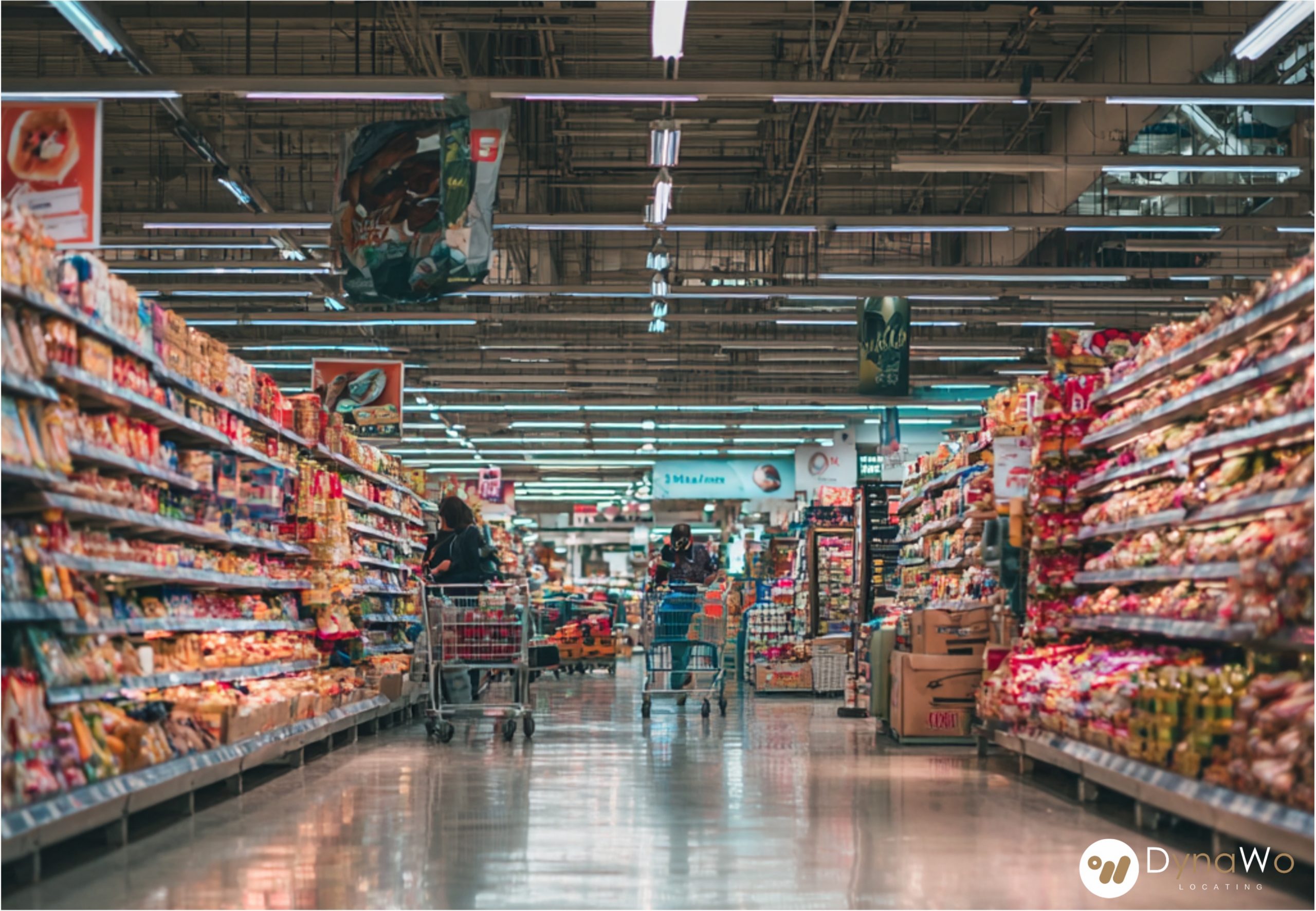
Supermarkets thrive on flow. The best shopping experiences feel effortless — customers move naturally through aisles, discover products easily, and reach the checkout just as it becomes available. But during busy hours, that flow often breaks. Crowded aisles, long lines, and delayed restocking turn convenience into frustration.
Retailers have traditionally responded reactively — adding cashiers or shifting staff only after congestion appears. RTLS changes this. By giving managers real-time insight into customer movement and operational conditions, supermarkets can anticipate bottlenecks before they form.
Picture a shopper using a smart cart equipped with RTLS. Before entering, their usual grocery list is synced with the store’s app. As they shop, the cart guides them through the optimal route — adjusting dynamically to avoid congested aisles or temporary restocking zones. Meanwhile, live data from checkout counters predicts queue length. When it’s nearly time to finish, the system recommends the best checkout window — so customers arrive when lines are shortest. The experience feels smooth and intentional. Shoppers find what they need faster, spend less time waiting, and leave with a sense of calm. These subtle improvements build satisfaction — and repeat visits.
For supermarket managers, RTLS offers a powerful operational advantage. By analyzing customer flow in real time, it provides visibility into how people move, where congestion builds, and when intervention is needed.
This data helps managers:
- Assign or close cashier stations proactively.
- Time restocking operations to quieter periods.
- Identify high-traffic zones that require layout adjustments.
Stocking becomes smarter too. If replenishment teams enter aisles during peak hours, flow slows and customer frustration rises. RTLS scheduling tools align restocking with off-peak moments, keeping shelves full and traffic unobstructed. Over time, these insights become part of the store’s intelligence. Patterns emerge — when families shop most, how specific promotions shift movement, which products create pauses or clustering. Layouts, signage, and staffing can be adjusted accordingly.
Loyalty is rarely won by price alone. Shoppers return to places where they feel their time and comfort are valued.
RTLS enables supermarkets to provide that assurance. When checkout waits are short, aisles flow naturally, and restocking happens seamlessly, the entire experience feels reliable. In an era where online grocery options are always available, physical stores must compete on experience — and that starts with flow. RTLS turns customer movement from chaos into choreography. It ensures that every process — from staffing to stocking — supports a consistent, pleasant shopping journey.
At DynaWo, we view RTLS as more than a logistics solution — it’s a framework for connected retail. By bringing real-time visibility to both operations and customers, it creates a shared understanding across the store.
When technology reduces friction, everyone benefits: customers move freely, employees work more efficiently, and management gains confidence that every aisle, counter, and cart contributes to the same goal — a smooth, satisfying experience.
Because when shopping feels effortless, loyalty follows naturally.