
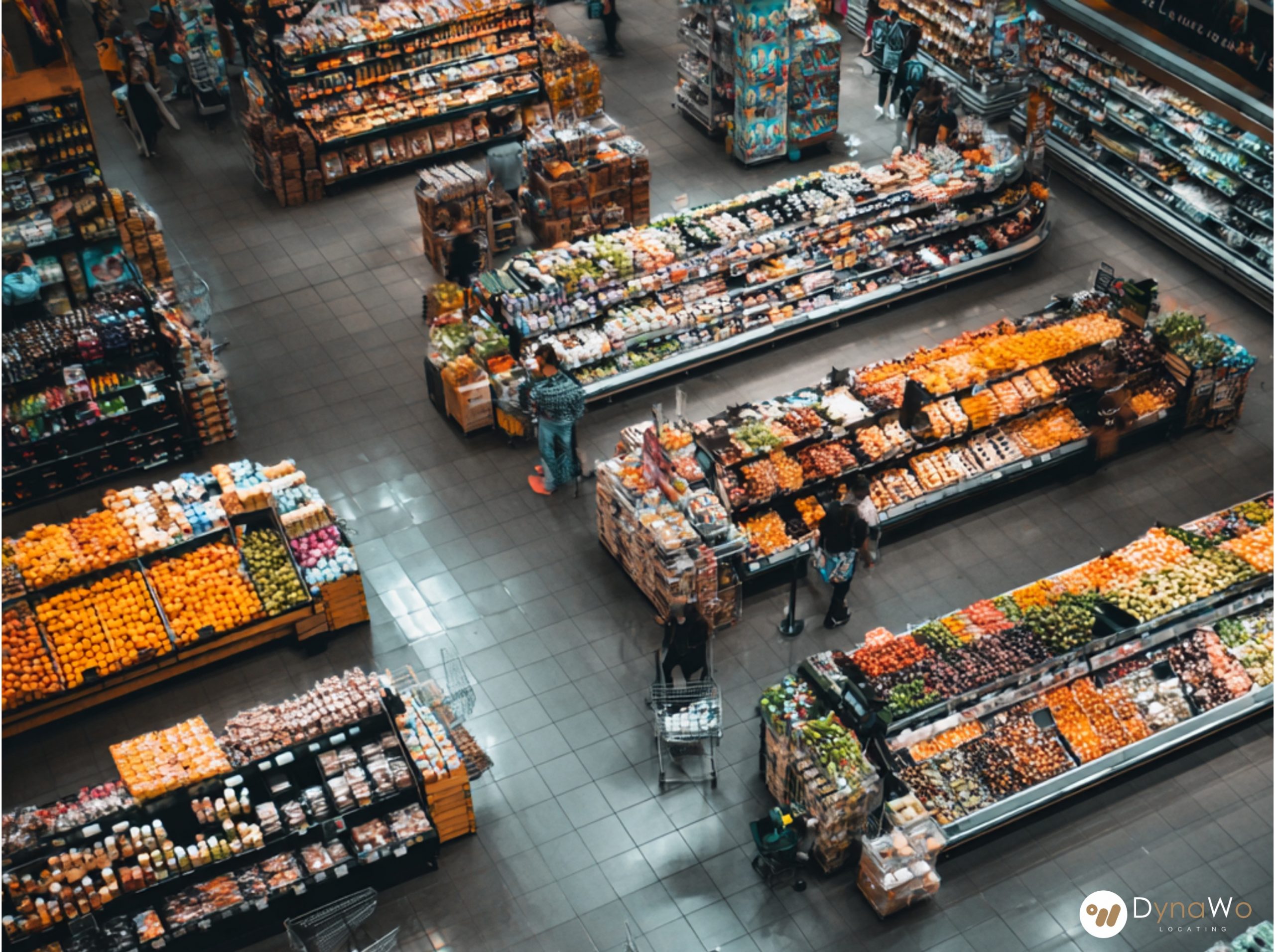
Supermarkets have long optimized their layouts to guide shopper behavior and boost sales. Researchers have studied how aisle design, product placement, and flow influence purchasing decisions. Yet one essential factor remains underexplored — the role of real-time location and environmental data in shaping both efficiency and experience.
At DynaWo, we’ve already shown how RTLS enhances cold chain visibility, maintaining optimal conditions during transport. The same technology can redefine what happens once food reaches the supermarket floor.
Smart Monitoring for Perishables: Every supermarket operates a series of climate-sensitive zones — from fresh produce to dairy and meat. Each zone requires precise temperature and humidity control. Traditionally, these parameters are checked manually or via static sensors, often too late to prevent deviations. With RTLS, tagged assets and integrated environmental sensors stream live data to a unified dashboard. If temperature dips below the required range in a dairy section or humidity rises in produce, alerts trigger automatically. Managers can intervene immediately, protecting product quality and minimizing food waste.
Dynamic Stock and Space Utilization: RTLS extends beyond monitoring. By pairing location data with shelf and storage metrics, supermarkets can detect underused capacity or prevent overstocking. For example, if one cooler is full while another nearby remains idle, the system flags the imbalance automatically. The result: optimized storage, reduced spoilage, and lower operational costs.
Improving Customer Flow and Energy Efficiency: Cold aisles are among the most energy-intensive areas in any store. When customer flow slows or congestion forms, refrigeration units must work harder to maintain temperature. By using anonymous BLE or trolley-mounted tags, RTLS allows managers to visualize movement patterns across the floor. If certain aisles consistently become bottlenecks — such as heavy traffic near the seafood counter blocking dairy access on weekends — layouts or promotional schedules can be adjusted. This improves comfort for shoppers and reduces unnecessary energy consumption.
A hybrid RTLS configuration ensures coverage across diverse environments:
- UWB in cold zones provide high-precision mapping.
- BLE AoA on trolleys track customer movement anonymously.
- Sensors monitor storage conditions cost-effectively.
- Geofences trigger automated alerts when temperature or occupancy thresholds are exceeded.
This integrated approach combines precision, scalability, and cost efficiency — enabling supermarkets to act on insights in real time.
From Layouts to Ecosystems: In an industry where profit margins are slim and sustainability is critical, RTLS bridges business performance and environmental responsibility. Instead of focusing solely on “which layout sells more,” supermarkets can ask a better question: which layout keeps food freshest, saves energy, and enhances customer experience at the same time?
RTLS delivers that balance. It protects food quality, lowers emissions, and helps design supermarkets that serve both people and products.