
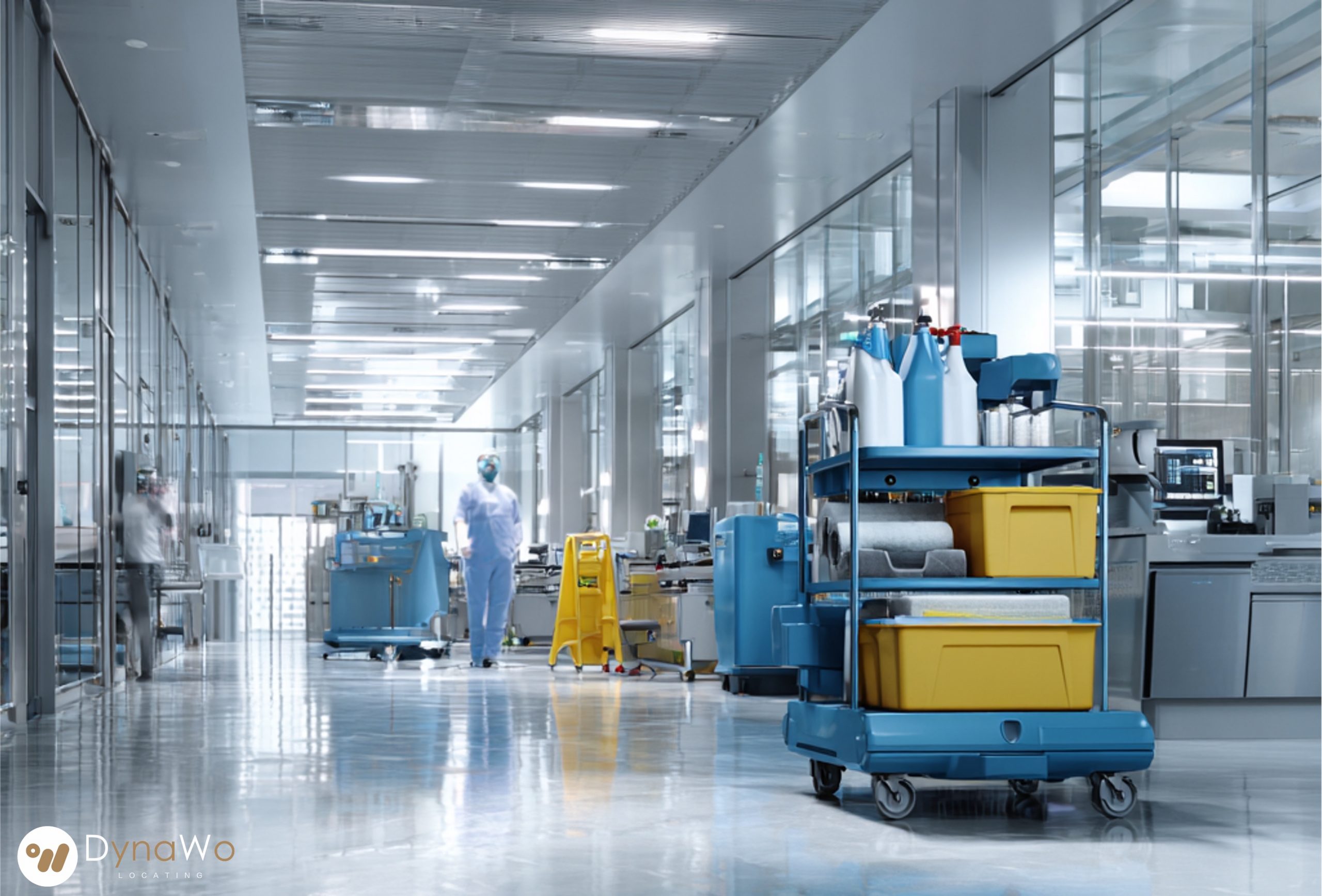
Hospitals rely on sterile equipment staying uncompromised from the moment it leaves sterilisation until the moment it is used. Instrument trays, procedure kits, diagnostic components, and specialised devices move through washing, sterilisation, cooling, storage, and internal transport. At every handover point, two questions matter:
- Where is the equipment now?
- Has anything happened that could put its integrity at risk?
In practice, many hospitals could only partially answer these questions. Fixed room sensors can confirm general temperature and humidity in storage areas, but they do not show what happened to a specific container during transport, near frequently opened doors, or in a staging area outside controlled storage. Inventory systems may confirm that a kit exists in the hospital, yet still leave staff searching corridor trolleys, side rooms, or temporary holding areas.
A stronger setup separates sensing from locating instead of treating them as one device. A BLE sensor tag can be attached to a sterilised container or transport box to monitor temperature, humidity, and shock events, with the data transmitted through BLE gateways. When higher location precision is needed, a separate UWB tag can be attached to the cart, trolley, or asset itself. The software layer then correlates the two data streams, linking environmental history and handling events to the correct item and place without confusing the underlying systems.
This all matter because sterile integrity is often threatened by short, localised events rather than by long periods of obvious failure.
- A storage room may remain within target range overall while humidity briefly rises near the entrance during repeated door openings.
- A cart may be bumped or dropped during transfer between departments.
- A kit may spend too long outside controlled storage while waiting for use.
With item level sensing and indoor visibility, these events are no longer hidden inside general room averages or incomplete handover notes.
The operational benefits are equally clear. Staff can find the right kit faster, reduce delays before procedures, and avoid unnecessary reprocessing caused by uncertainty. Quality teams gain a documented history for each asset rather than a fragmented reconstruction assembled after an incident. During audits, the hospital can show when a container moved, what conditions it experienced, and whether any shock threshold was exceeded before clinical use.
The value here lies in providing confidence. Sterile equipment management works best when location records, environmental monitoring, and handling history support one another. By keeping BLE sensing and UWB locating technically distinct but analytically connected, hospitals may improve patient safety, strengthen compliance, and make daily operations more reliable.