
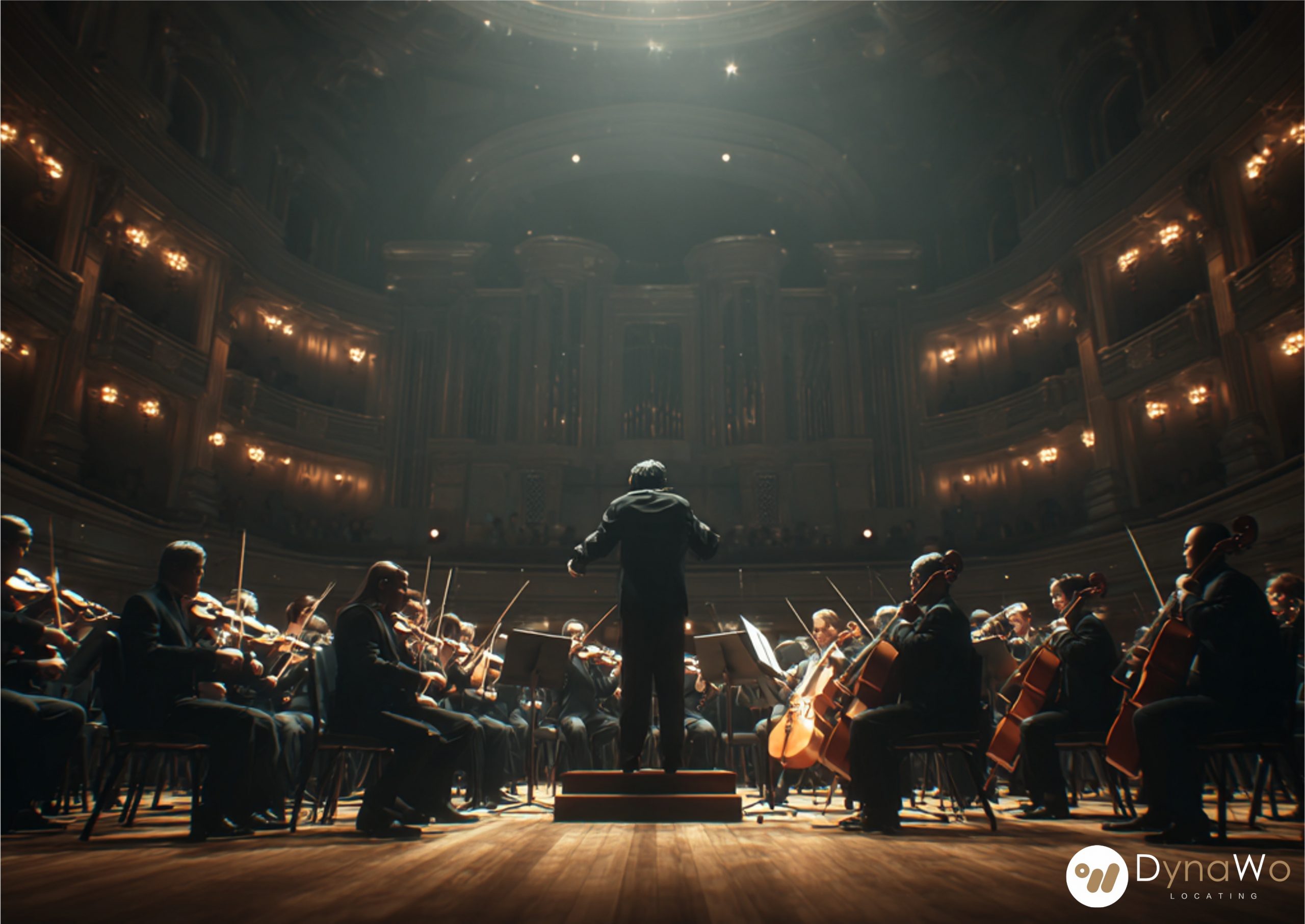
Walk into an empty concert hall before a performance and the silence feels charged. Every musician knows their part. Every instrument has its place. But without rhythm, harmony, and melody working together, there is no music — only noise waiting to happen.
A smart factory is very similar. Machines, assets, and workers all play their roles, yet it is the digital coordination behind them that turns movement into productivity. This coordination comes from the layered software architecture of RTLS. Understanding these layers is like understanding how an orchestra makes a symphony possible.
At the base of every RTLS deployment is the location engine. This is the rhythm section — steady, precise, and unwavering. Just as percussion sets the tempo, the location engine processes signals from tags and anchors, computes distances, and produces reliable coordinates. Without consistent rhythm, an orchestra falls apart. Without accurate location data, every application above it loses coherence. The factory depends on that rhythm. It ensures that tools are where they should be, machines are synchronized, and materials move as expected.
Above rhythm lies harmony, the component that shapes raw sound into structure. RTLS middleware plays the same role. It receives the precise “notes” from the location engine and organizes them into meaningful patterns. Harmony does not draw attention to itself — but without it, the performance collapses. Middleware ensures all components respond coherently, whether pausing a conveyor when a worker enters a zone or triggering alerts when assets deviate from their path.
Finally comes the melody — the part listeners recognize. In RTLS, the application layer is that melodic line. It includes dashboards, interfaces, reports, and analytics that humans interact with directly. This layer transforms rhythm and harmony into something usable. The melody is what supervisors, operators, and managers hear. It is where decisions are made and value is realized.
When these three layers work together, something remarkable happens. Movements no longer feel isolated. The production line breathes in tempo. Machines “listen” to each other. Workers navigate intuitively. Processes unfold like measures in a score. Factories become orchestras that perform with consistency, awareness, and balance — not through individual brilliance, but through synchronized intelligence.
At DynaWo, that harmony is the foundation of every deployment. Because when rhythm is stable, harmony is structured, and melody is clear, the result is a factory that plays in tune.