
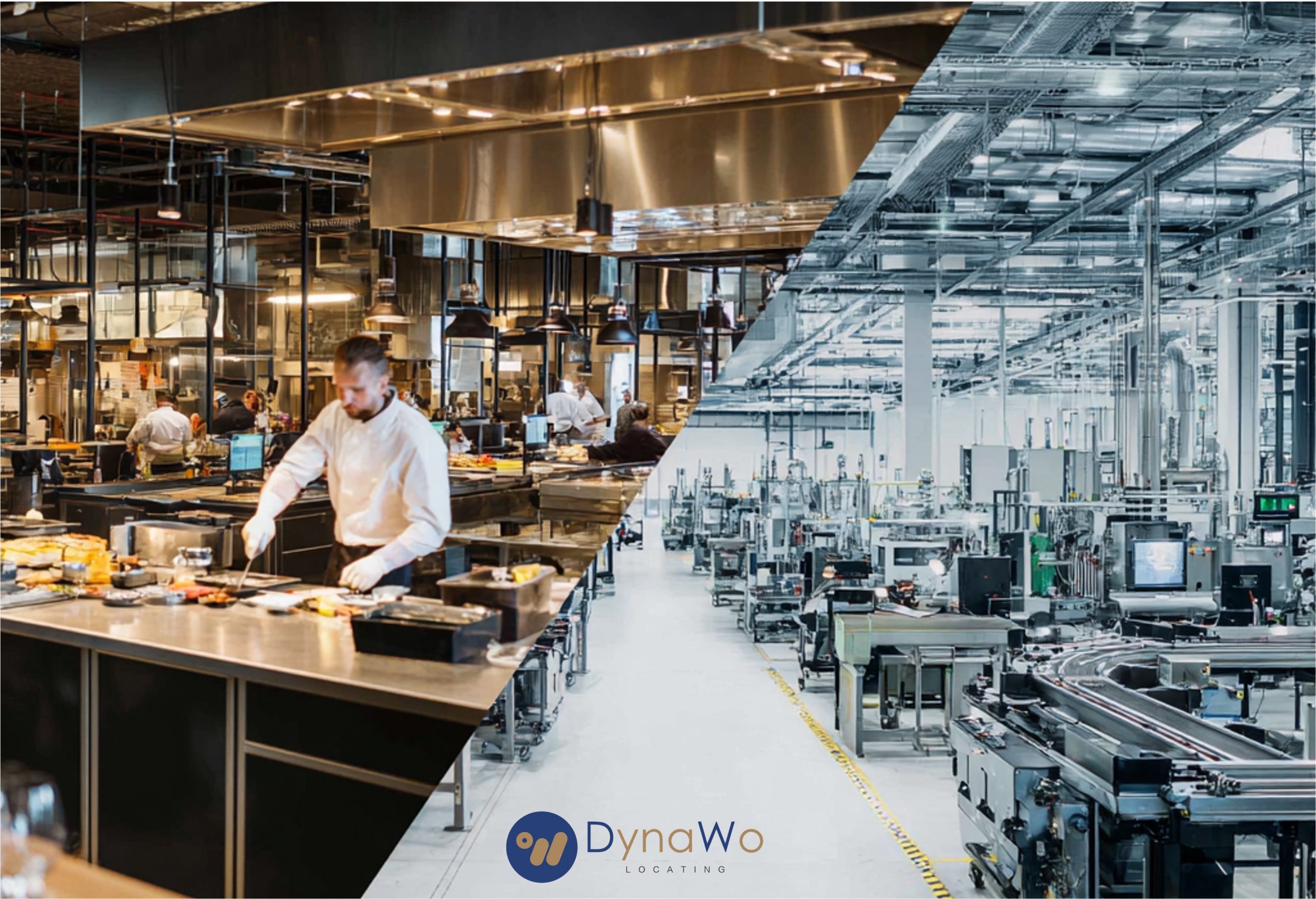
In restaurants, the kitchen was once a mystery. Diners waited behind closed doors, unsure of what was happening beyond the swinging panels. But as food culture evolved, curiosity turned into expectation. People wanted to see the process of their meals prepared. They want to witness the care, the craft, and the authenticity behind every dish.
As Eater notes, the rise of open kitchens marked a cultural shift: chefs who were once hidden behind walls now perform in front of guests, their work becoming part of the dining experience (Wolf, 2023).
In the age of smart factories, transparency extends beyond a technical capability to a social and emotional one. Consumers no longer want to imagine where their products come from. They want to see every step in production. Whether it’s a customized pair of sneakers, a limited-edition coffee machine, or a piece of handcrafted furniture, buyers crave connection to the process. They want to know that their order is more than one of a million anonymous units, it’s their unique unit.
And they want to know it was made responsibly: with care for the environment, with respect for the workers, and with a brand philosophy that aligns with their values.
That kind of visibility has to be planned, to be built. Real-Time Locating Systems (RTLS) are quietly enabling this new level of transparency by creating real-time digital windows into production. By tracking goods, components, and even personnel across each step of manufacturing, RTLS generates live, accurate data about what’s happening on the floor. This data can be visualized for both operations and customers:
- Showing clients exactly where in the process their product is.
- Confirming that it passed through every required safety and sustainability checkpoint.
- Displaying production times, material origins, and quality control stages.
When integrated into customer-facing platforms, this transparency becomes part of the product experience itself. Customers can log in, see progress updates, and feel the story unfold — just like diners watching a chef prepare their meal. Factories that share their process can humanize this flow and create a competitive advantage. They show that production could be both mechanical and mindful. Customers respond to that respect behind the product, their product.
In an era where consumers are increasingly skeptical of “greenwashing” and empty sustainability claims, real-time manufacturing visibility provides something powerful: proof. RTLS data can verify that materials were ethically sourced, machines ran within safe limits, and workers operated in healthy conditions.
Tomorrow’s factories won’t be closed boxes but living showcases. When clients or end users can see their goods being assembled, customized, and quality-checked in real time, production becomes part of the story they buy into. And with RTLS, every movement of every product can be part of that narrative — accurate, respectful, and sustainable.
At DynaWo, we believe transparency is no longer optional. It’s the new language of trust. RTLS helps brands tell their story not through words, but through visibility. From kitchens to factories, the principle is the same: when people can see the care, they believe in the craft.
Wolf, N. (2023, November 16). How open kitchens became a fixture of modern dining. Eater. https://www.eater.com/23736307/open-kitchens-chefs-diners-wolfgang-puck-spago