
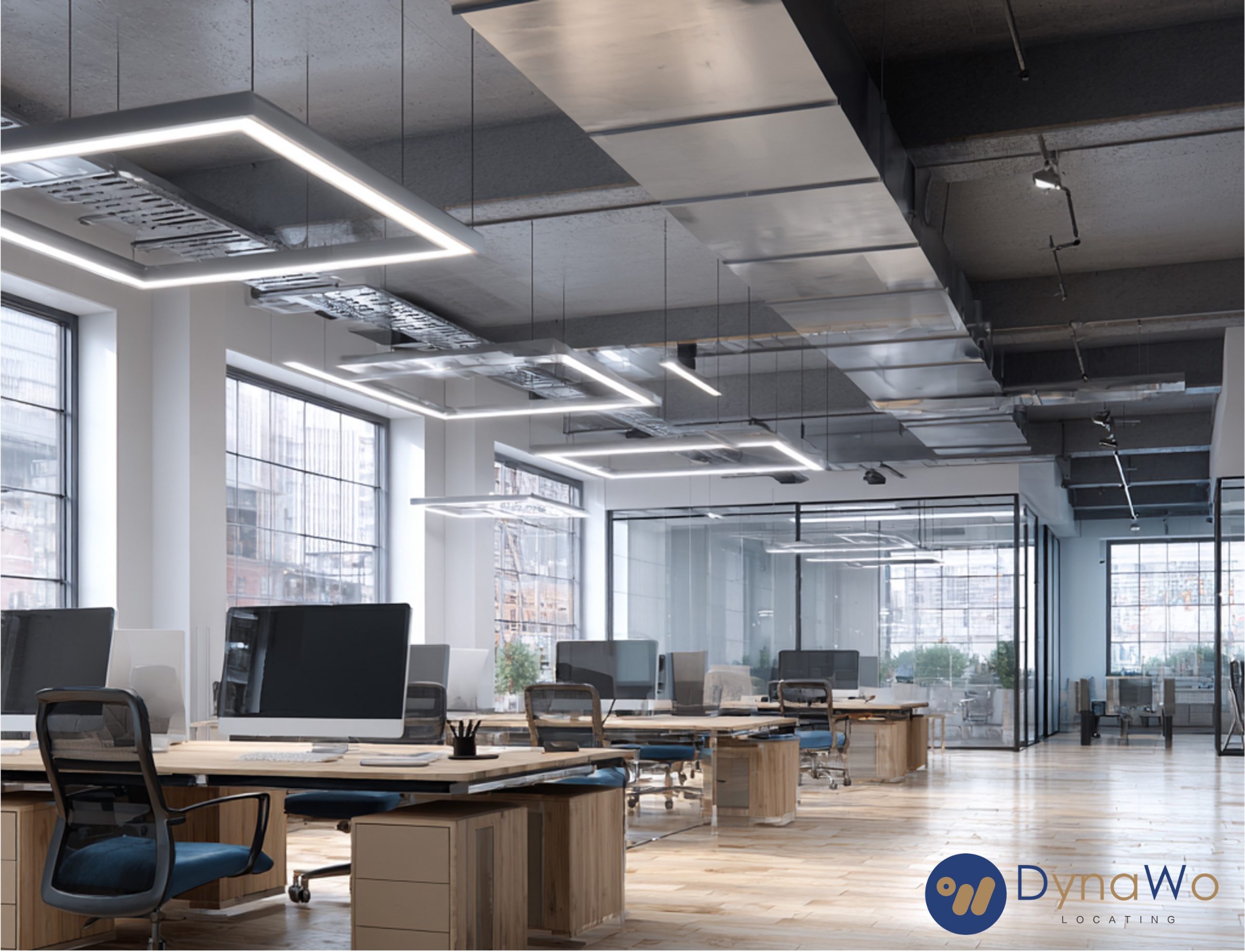
The office has always been more than just a place to work. Its design reflects how we think about creativity, collaboration, and productivity. Office spaces have evolved from traditional closed-door rooms to open concepts that support flexible, group-oriented, and even playful working styles. Layout and design are no longer just aesthetic — they shape how people interact, connect, and thrive.
But design alone isn’t enough. To make modern offices work — balancing freedom, safety, and sustainability — businesses need real-time insights into how their spaces are actually used. That’s where real-time location systems (RTLS) come in.
Freedom to Roam, With Data to Guide It
One of the promises of open-concept offices is freedom: employees can roam, choose meeting spots, and configure their environment as needed. RTLS supports this by showing which spaces are occupied, which are free, and how crowded routes are in real time.
With presence sensing and indoor navigation, employees can avoid wasting time searching for a meeting room. Instead, they can open an app that shows where space is available — whether it’s a quiet corner for focus or a collaborative hub for brainstorming. The result is flexibility that works in practice, not just in design drawings.
Safe Collaboration in Shared Environments
During COVID-19, offices faced a new challenge: how to bring people together while limiting the risk of contamination. Here again, RTLS proved its value. By tracking occupancy anonymously through door sensors, corridor tags, and room-level monitors, RTLS can provide visibility into when spaces were last used and how crowded they are now.
That means employees can choose a route or a desk that hasn’t been used recently, reducing the chance of overlapping. Managers can also enforce distancing guidelines without policing individuals — simply by setting geofence alerts when too many people gather in one area. Importantly, privacy is preserved: the system doesn’t need names or personal data, only anonymous signals from work tags or badges.
Coworking as the New Normal
This matters not only in corporate offices, but in the booming world of coworking. Coworking spaces have emerged as crucial environments for fostering innovation and collaboration among modern professionals. Challenge exists in balancing flexibility and privacy while addressing sector-specific needs. RTLS provides that balance. By offering room-level presence monitoring instead of individual tracking, for example, coworking operators can manage occupancy, energy use, and cleaning schedules while respecting personal boundaries. Members get the freedom they value, managers get the visibility they need, and privacy is not compromised.
Smarter Energy and Sustainability
Another hidden benefit of RTLS in offices and coworking spaces is energy management. Too often, lights, air conditioning, and ventilation run in empty rooms. With presence sensing, RTLS can automatically turn off energy systems when spaces are unoccupied — or activate them when people enter. Ventilation can be adjusted dynamically based on occupancy, improving both air quality and sustainability.
This creates workplaces that are not just flexible and safe, but also greener. Lowering unnecessary energy use reduces costs and helps companies and operators meet ESG targets without compromising comfort.
Toward the Creative Workplace of the Future
Research on pattern language in office design emphasizes socio-psychological factors: community connections, environmental metaphors, and playful, adaptive spaces. RTLS extends this vision by providing the invisible layer of data that supports these goals. It’s not about surveillance or micromanagement — it’s about enabling people to use the workplace on their own terms, with transparency and fairness.
In practice, that means offices and coworking spaces where:
- Employees can navigate freely without worrying about space conflicts.
- Safety guidelines are respected without intrusive supervision.
- Energy adapts automatically to occupancy.
- Creativity and collaboration flourish in environments that are both free and fair.
At DynaWo, we see RTLS as the missing link between workplace design theory and day-to-day reality. By combining open concepts and coworking flexibility with real-time insights, businesses can create spaces that are not just modern in appearance, but genuinely smarter, safer, and more sustainable.