
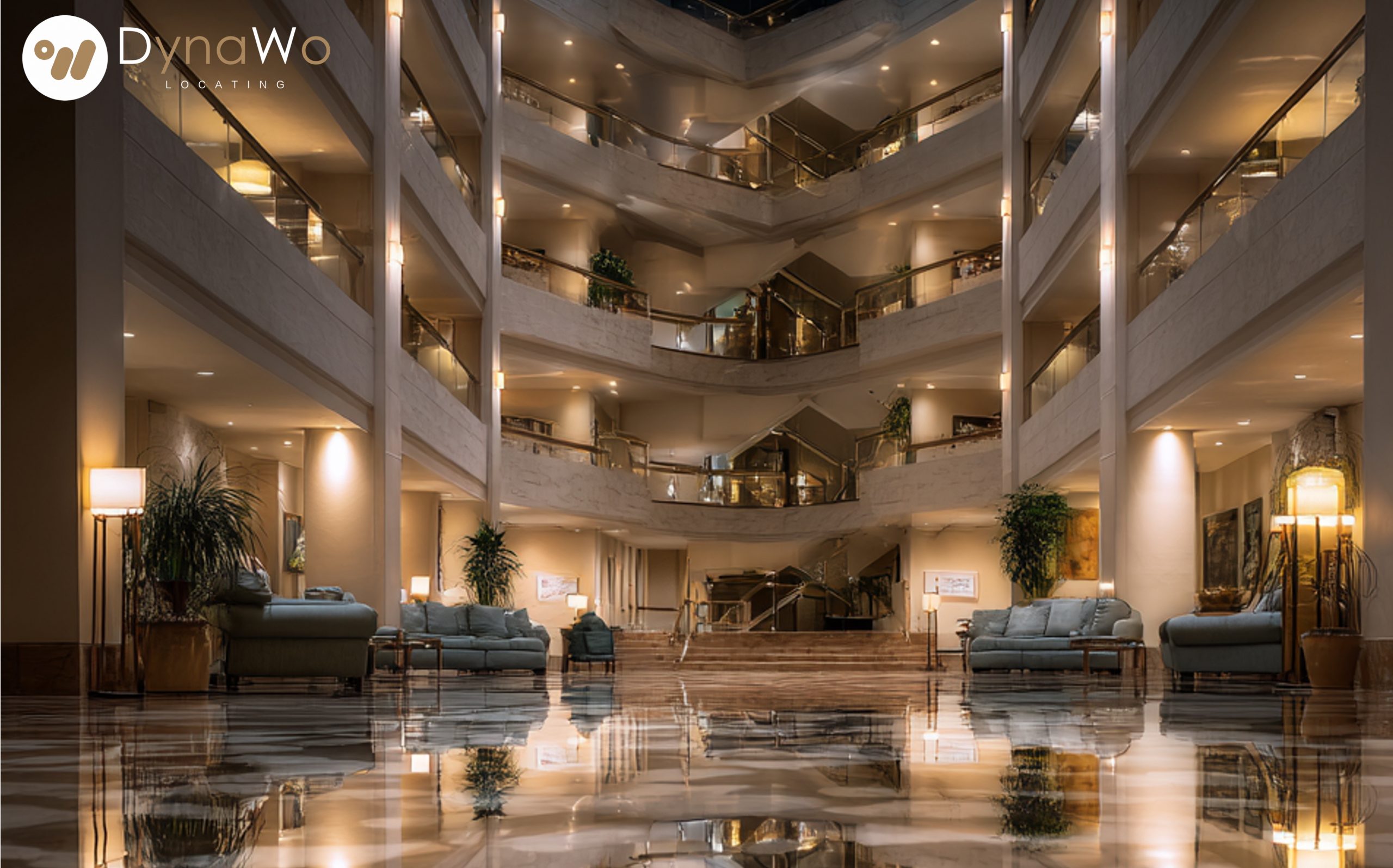
In hospitality, few numbers carry as much weight as occupancy rate. For decades, hoteliers have used it as the foundation of strategy, from pricing to promotions. Occupancy has long been the heartbeat of hotel management.
But today, the industry is ready to move beyond that single number. With real-time locating systems (RTLS), hotels can gain an entirely new level of insight — not only into how many rooms are filled, but into how to provide better service to guests with full flexibility.
Consider the public spaces. RTLS tags and anchors can map guest flows across lobbies, corridors, elevators, restaurants, and pools. The result is a heat map of hot zones and quiet corners. Which restaurants are most popular, and at what times? Which elevators experience bottlenecks before dinner service? With this data, hotels can time promotions more effectively — placing ads or digital signage exactly when and where they’ll resonate most. Marketing becomes not just reactive, but spatially and temporally targeted.
Room service is another example. RTLS data can reveal peak hours for orders, allowing hotels to adjust staffing and upsell offers. A well-timed campaign — say, a push notification promoting late-night dining — can reach guests exactly when they’re most likely to act.
Operations benefit too. By tagging housekeeping carts or monitoring room entry times, managers can understand how long cleaners spend in each room, and whether teams are understaffed. RTLS doesn’t just measure effort; it supports fairness and workload balance, while helping improve turnaround efficiency. Combined with energy monitoring (temperature, humidity, CO₂ sensors), RTLS data also ensures empty rooms aren’t cooled, heated, or lit unnecessarily. The sustainability gains alone can reduce costs while supporting corporate ESG goals.
And this is where RTLS redefines what “occupancy” means. Traditionally, occupancy tells us how many rooms are sold. With RTLS, we can understand how those rooms are used, how spaces connect, and how services are consumed. It shifts the lens from “heads in beds” to “experiences in motion.”
Imagine being able to correlate CO₂ levels in meeting rooms with guest satisfaction scores, or to know that guests using the spa are more likely to order from a particular restaurant afterward. These insights create a holistic picture that can fuel marketing campaigns, loyalty programs, and personalized offers.
The potential is enormous. Hotels have always used occupancy to steer strategy — but with RTLS, they can finally see the nuances behind the numbers. It’s no longer just “70% full.” It’s “70% full, with peak traffic in the lobby bar at 7 p.m., underserviced cleaning teams on the 12th floor, and a marketing opportunity in the spa corridor at checkout time.”
At DynaWo, we believe RTLS is more than a technology — it’s a way to turn every movement into insight. For hospitality, that means protecting the planet by cutting wasted energy, supporting staff with fairer workloads, and unlocking smarter, more effective marketing campaigns.
In short: from occupancy to opportunity.